
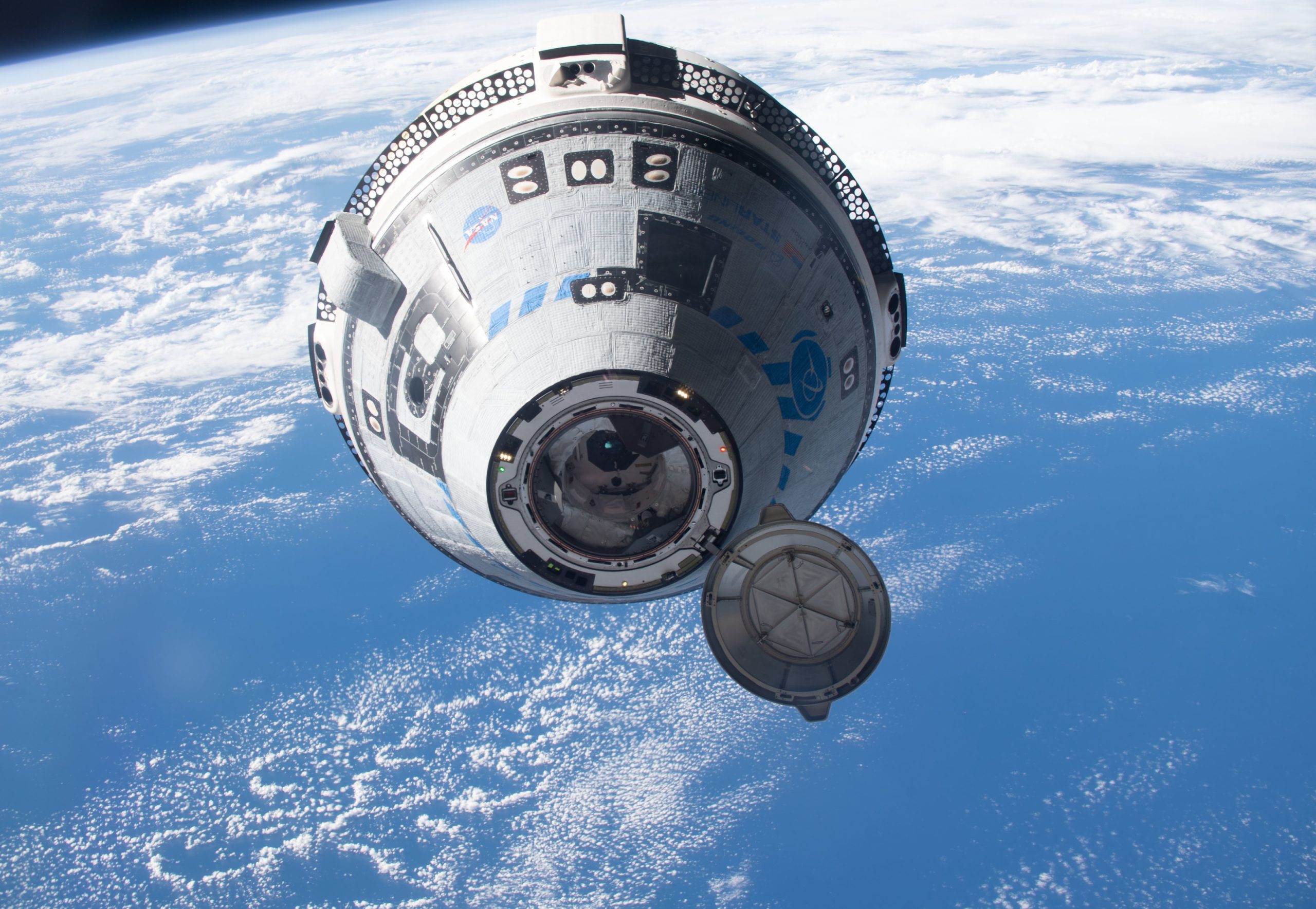
Boeing Starliner Faces New Setback: NASA Removes Astronauts From Next ISS Mission
Boeing’s Starliner spacecraft has hit another major hurdle. NASA announced that the capsule’s upcoming mission to the International Space Station (ISS) will launch without astronauts on board. Instead, the agency and Boeing will conduct a cargo-only test flight to verify the vehicle’s reliability and safety.
This decision marks the latest setback for Boeing’s long-delayed Starliner program — and comes just eight months after its first and only crew returned to Earth aboard a SpaceX vehicle following a prolonged stay on the space station.
Why NASA Pulled Astronauts From the Next Starliner Launch
During their 2024 mission, NASA test pilots Butch Wilmore and Suni Williams managed to successfully dock the Starliner capsule to the ISS. But the vehicle experienced numerous failures, including thruster malfunctions and propulsion system issues, prompting NASA to order the spacecraft to return to Earth without the crew on board.
Instead of returning in the Starliner capsule, the astronauts spent more than nine months aboard the ISS until a SpaceX Crew Dragon could bring them home safely. Since then, NASA and Boeing engineers have spent months analyzing every fault in the spacecraft’s performance.
Starliner Will Undergo a Cargo-Only Test Flight
NASA confirmed that the Starliner’s next mission — tentatively scheduled for no earlier than April — will serve as a full-scale cargo test flight. The goal is to thoroughly evaluate the capsule’s systems before attempting another crewed mission.
Boeing emphasized in a public statement that it remains “committed to the Starliner program” and continues to prioritize safety above all else.
NASA Cuts Number of Future Starliner Flights
Along with the test-flight changes, NASA is also revising Starliner’s long-term role in its Commercial Crew Program. The agency has reduced the number of planned future Starliner flights from six to four. If the upcoming cargo mission is successful, only three crewed Starliner flights will remain before the ISS’s planned retirement in 2030.
“NASA and Boeing are continuing to rigorously test the Starliner propulsion system in preparation for two potential flights next year,” said Steve Stich, NASA’s Commercial Crew Program manager.
Boeing vs. SpaceX: A Tale of Two Commercial Crew Providers
NASA awarded Boeing and SpaceX commercial crew contracts back in 2014, three years after the last space shuttle mission. Boeing received $4.2 billion to build the Starliner capsule, while SpaceX received $2.6 billion for what would become the Crew Dragon spacecraft.
While the Starliner has faced repeated delays and technical challenges, SpaceX has steadily become NASA’s primary crew launch provider. SpaceX launched its first astronaut mission in 2020 and has since completed 12 crewed missions for the agency — including one this past summer.
What This Means for the Future of Starliner
The upcoming cargo test flight represents a critical moment for Boeing. Success would keep the Starliner program alive and allow it to contribute to the final years of ISS operations. Failure, however, could further widen the gap between Boeing and SpaceX in the race to support NASA’s human spaceflight missions.
For now, NASA and Boeing engineers are racing to ensure the Starliner is finally ready for the role it was designed for — safely transporting astronauts to and from space.

