
Who’s On Trump’s “Gaza Board of Peace” — And Why Some U.S. Allies Are Keeping Their Distance
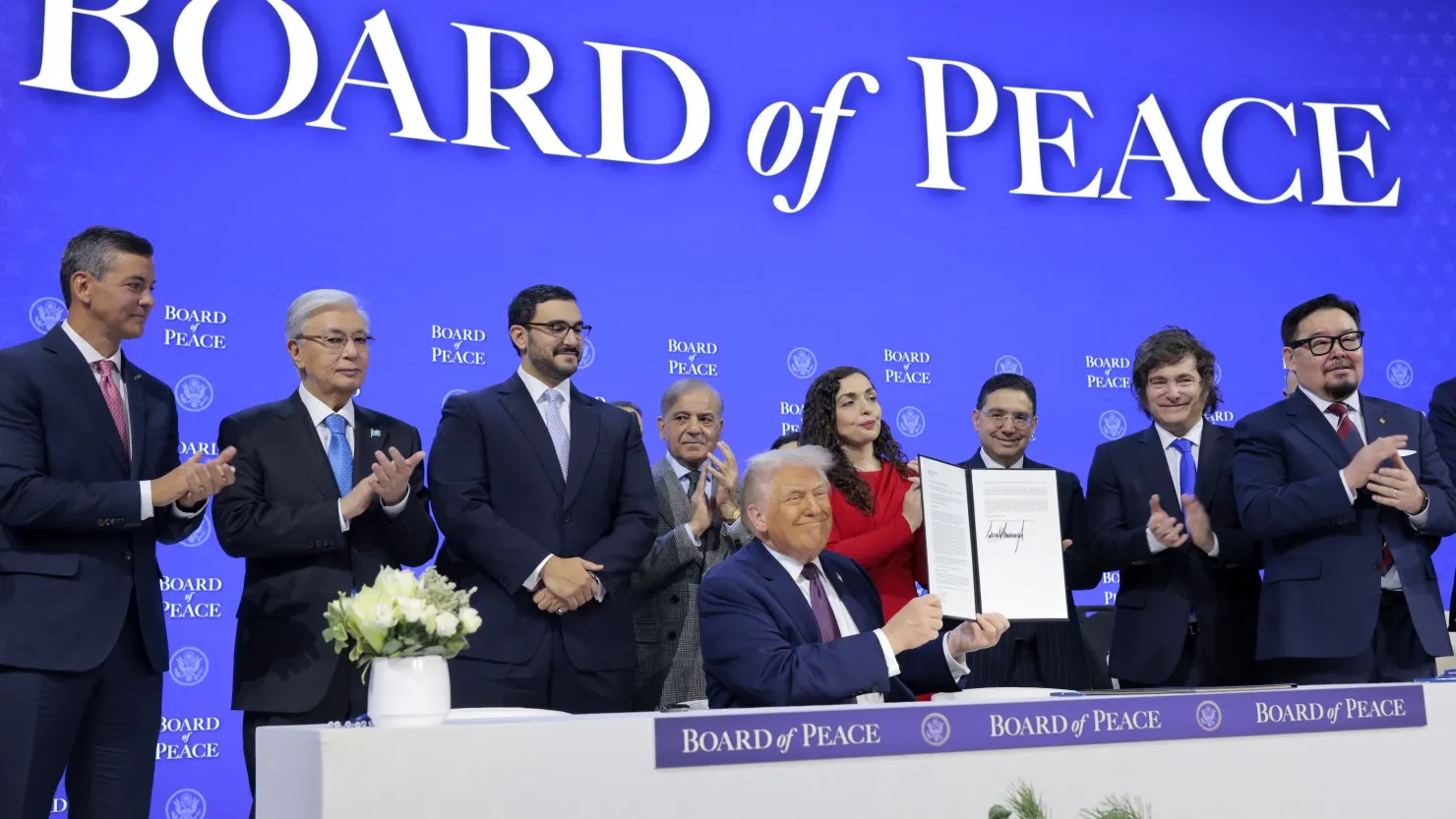
President Donald Trump has formally launched a new international initiative he’s calling the “Board of Peace,” aimed at overseeing a Gaza ceasefire framework and long-term reconstruction planning.
The announcement took place during the World Economic Forum in Davos, where Trump hosted a high-profile signing ceremony and promoted the group as a major step toward long-term stability in the region.
But while the initiative includes a mix of political figures and business leaders, a major part of the story is also about who isn’t participating — with several European allies signaling they are not ready to sign on.
What is Trump’s Gaza “Board of Peace”?
The Board of Peace is being described as a new political and investment-led structure designed to guide:
-
post-war administration planning
-
reconstruction strategy
-
international coordination on security and funding
-
potential investment pathways for redevelopment
Supporters argue it creates momentum for rebuilding, while critics say the structure could undermine existing global mechanisms like the U.N.
ABC News reported that Trump framed the group as a historic international body, while acknowledging that major European allies have so far declined to join.
Key names linked to the Board of Peace
While the full list has been evolving, multiple reports from Davos referenced several high-profile names connected to the initiative, including:
-
Donald Trump (chair)
-
Marco Rubio (U.S. Secretary of State)
-
Jared Kushner (linked to reconstruction planning and investment strategy)
-
Tony Blair (former U.K. Prime Minister)
-
Steve Witkoff (U.S. Middle East envoy, per reports)
The Guardian reported several of these names in its coverage of the initiative and the backlash from allies, including concerns about credibility and membership structure.
Meanwhile, the Financial Times reported Kushner used Davos to outline a large-scale redevelopment concept for Gaza framed as a major investment-led reconstruction plan.
Why some allies are hesitant to join
One of the most important storylines is that major European countries have held back, raising concerns that:
-
the group could conflict with the role of the United Nations
-
the structure may lack clear legal grounding
-
the membership could include controversial figures
-
there’s limited clarity on enforcement and governance
In the U.K., senior officials indicated that Britain is not ready to sign onto the board, even if it supports broader peace and reconstruction objectives.
The financial angle: rebuilding Gaza could reshape regional investment flows
Beyond politics, the biggest market-related factor is reconstruction financing. Large-scale rebuilding would likely require:
-
multi-billion-dollar commitments
-
coordination between governments, development banks, and private investors
-
long-term security guarantees
That’s why the Board of Peace is being pitched not just as diplomacy, but as an economic redevelopment framework — with investors expected to play a role depending on stability and governance conditions.
Final Takeaway
Trump’s Gaza “Board of Peace” is being promoted as a bold international initiative blending diplomacy and economic rebuilding. But the early rollout also shows real divisions — with some allies hesitant to participate and questions emerging about legitimacy, membership, and long-term execution.
For markets, the key watchpoints are whether the board attracts credible funding commitments and whether the ceasefire/reconstruction process holds long enough for investment frameworks to become actionable.
FAQ: Trump’s Gaza Board of Peace
What is the Gaza Board of Peace?
It’s a Trump-led initiative announced in Davos meant to oversee Gaza ceasefire coordination and long-term reconstruction planning.
Who is involved?
Reports have referenced figures including Trump, Marco Rubio, Jared Kushner, and Tony Blair among others.
Why are some allies not joining?
Some European officials say they are concerned the board could rival the U.N. or lacks clear structure and legitimacy.

